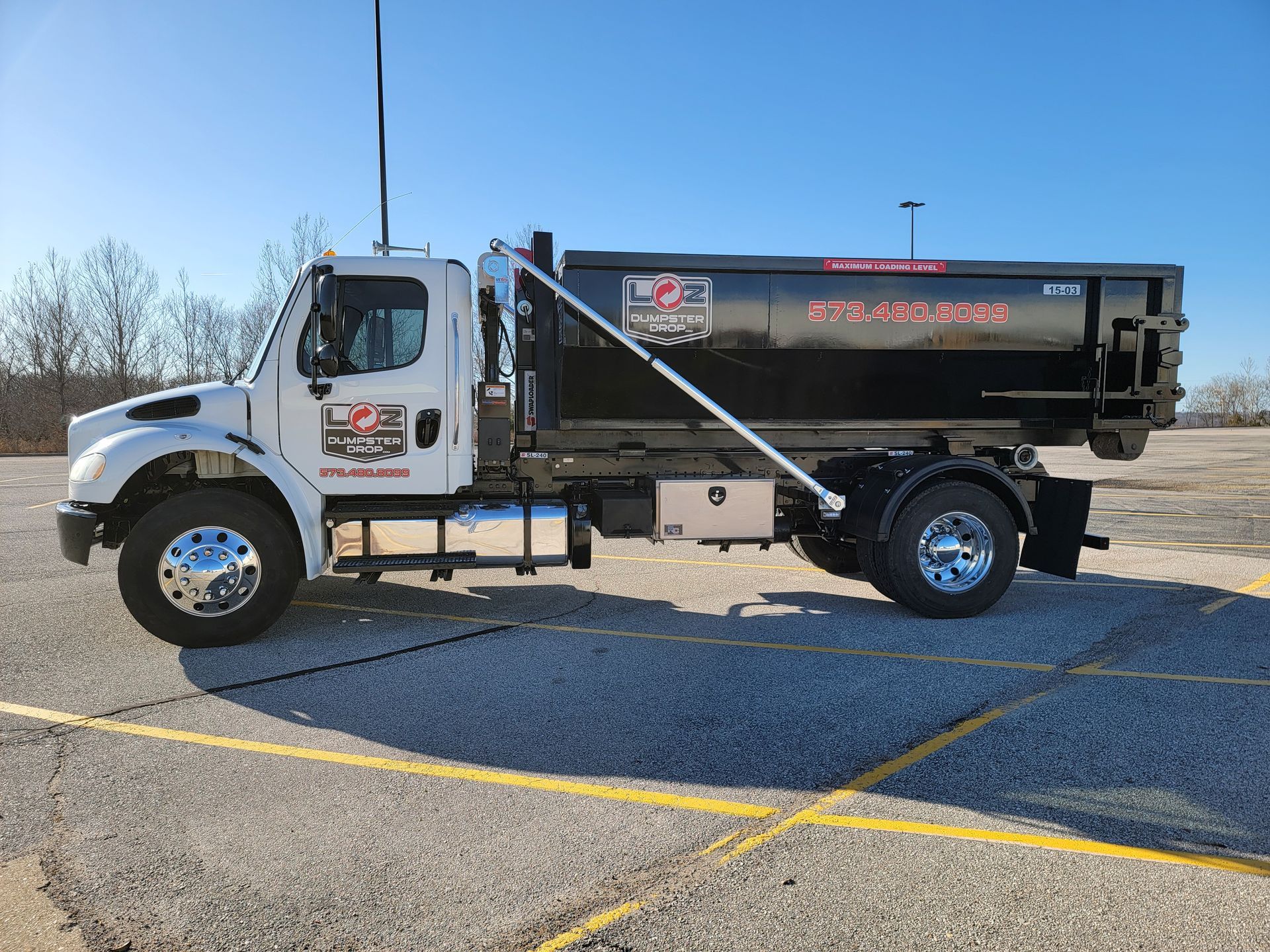
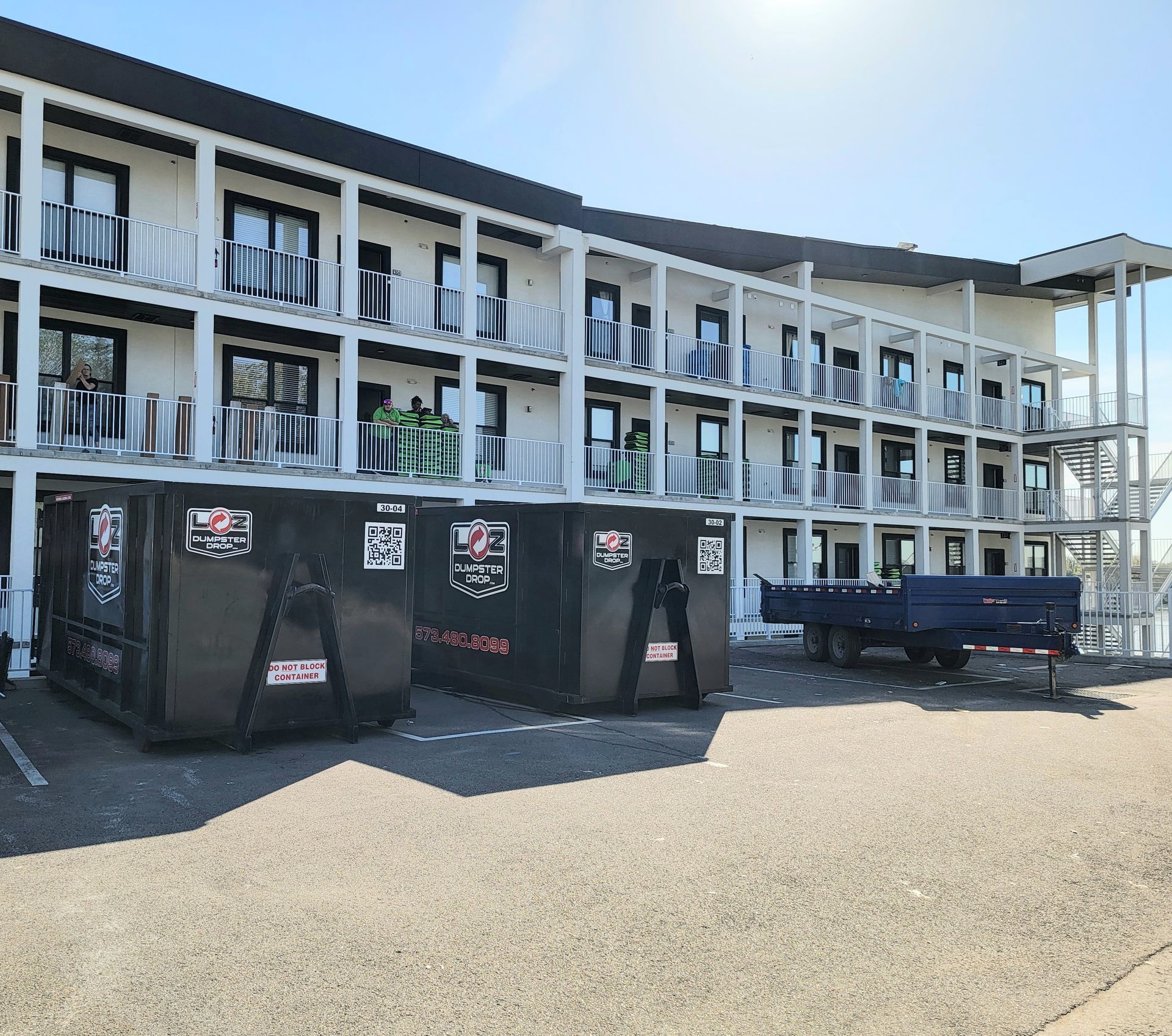
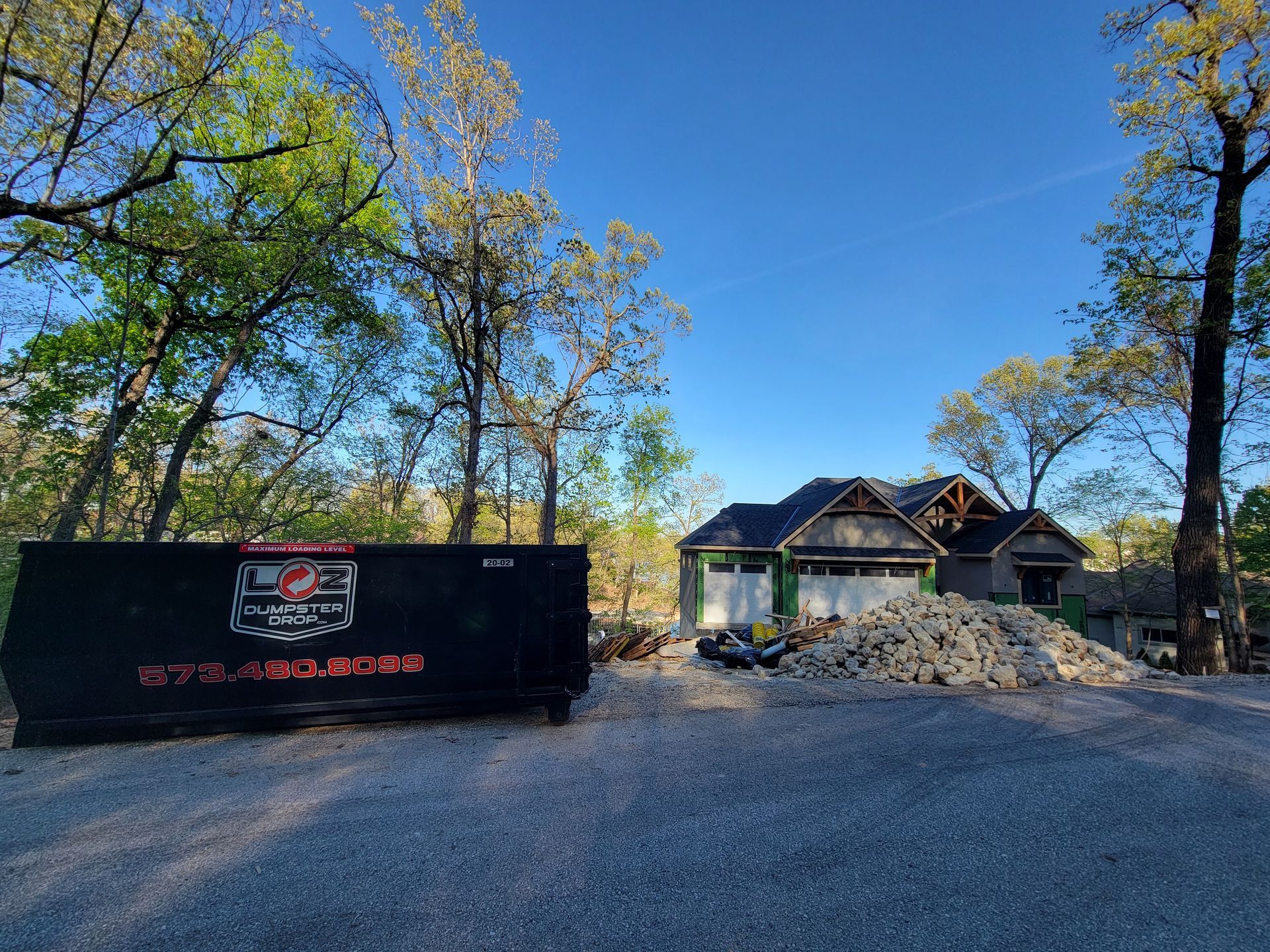
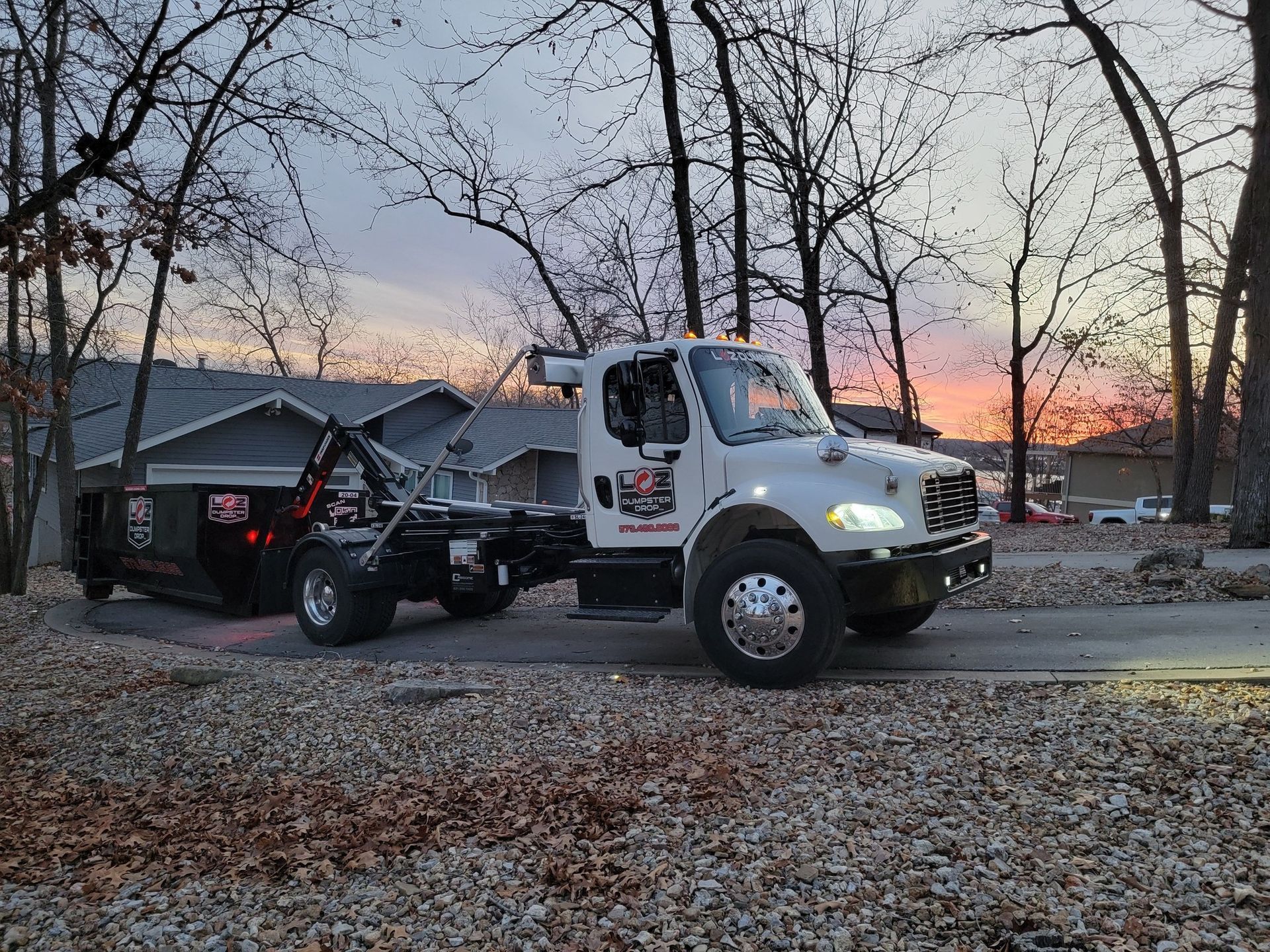
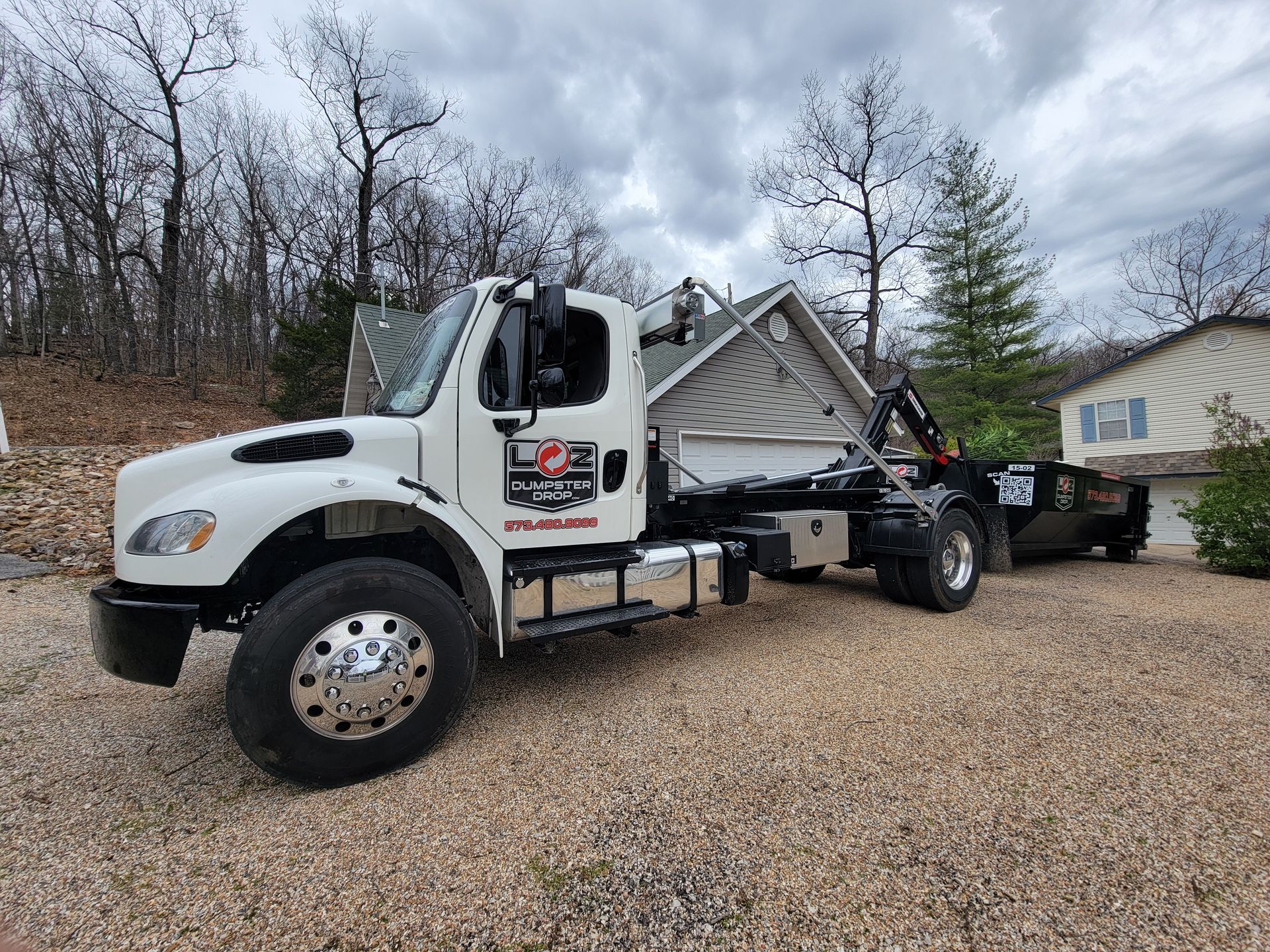
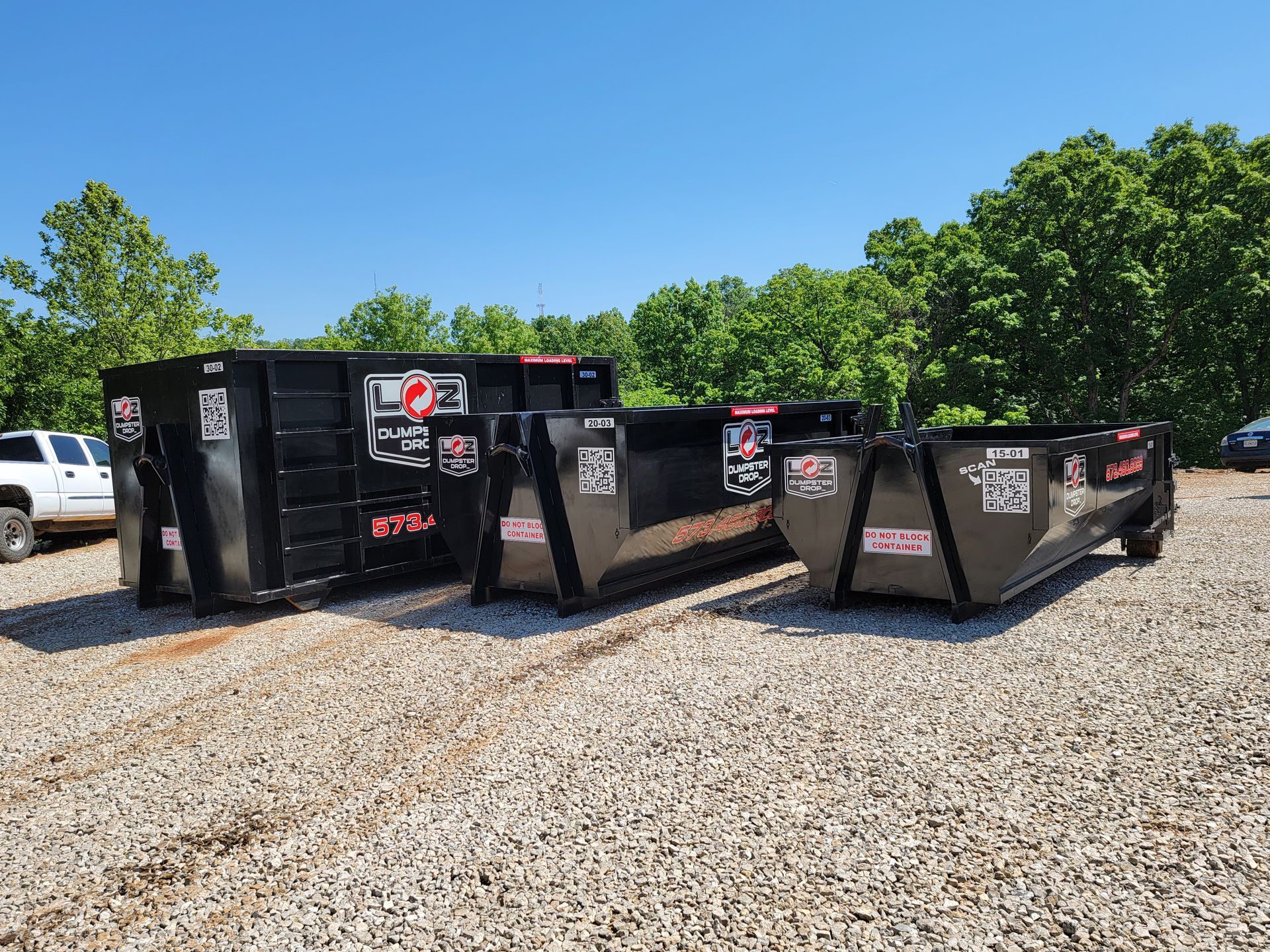
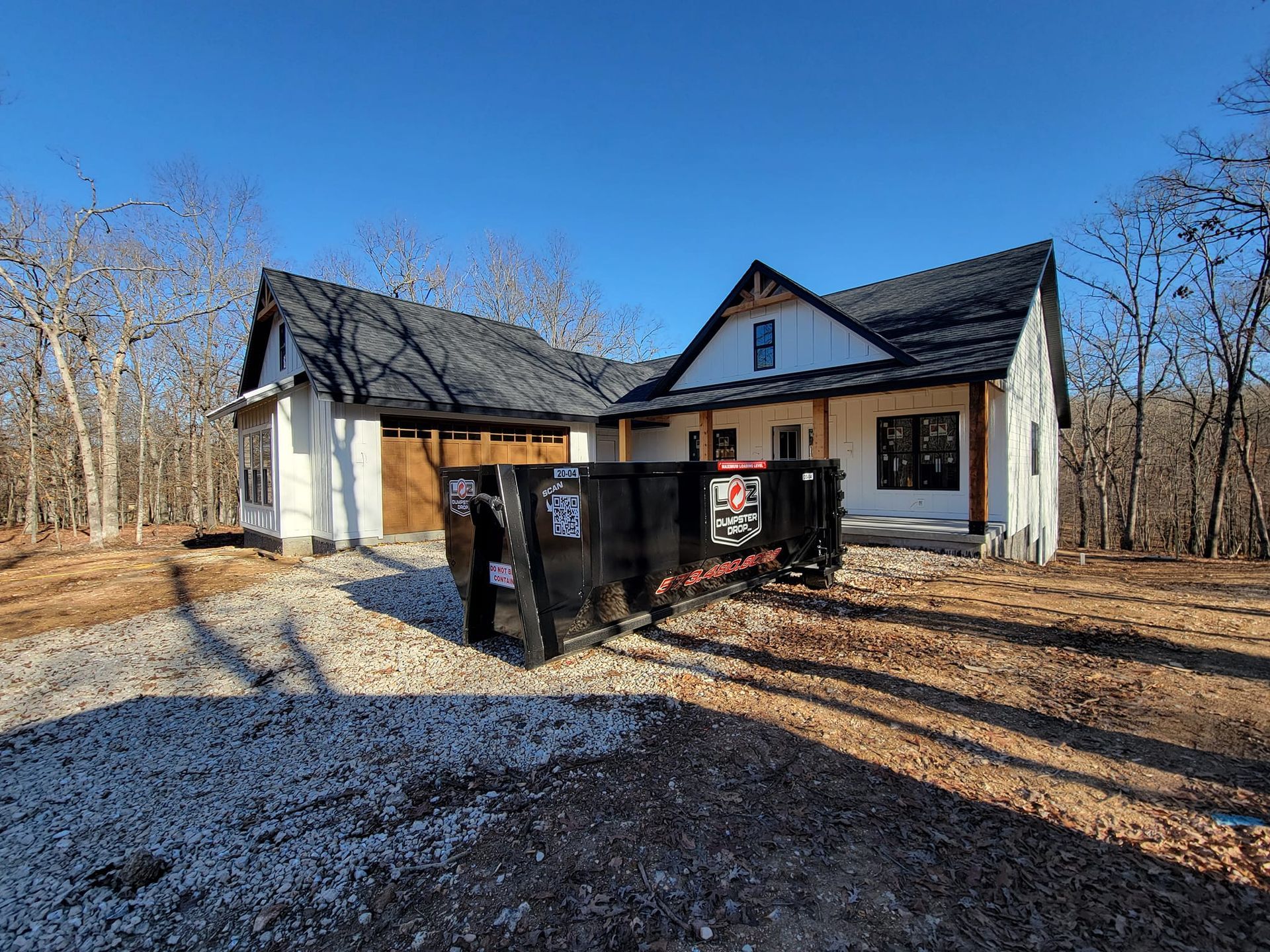
A 15-yard dumpster (16'x7'x4', up to 3 tons) fits garage cleanouts, single-room renovations, and yard debris. A 20-yard dumpster (16'x7'x6') is the most versatile choice, covering basement cleanouts, single-layer roofing jobs, and kitchen or bathroom remodels. A 30-yard dumpster (17'x8.5'x7.5') suits whole-home cleanouts, major renovations, and new construction debris. When project scope is uncertain, sizing up avoids the cost and delay of a second haul.
A homeowner in Osage Beach stands at a booking screen with a cursor hovering between the 15-yard and 20-yard option, unsure which size will actually handle a kitchen demo without overflowing by the third day. This moment repeats itself across Lake Ozark, Rocky Mount, and Sunrise Beach every renovation season, and the wrong guess carries a real cost.
Ordering a dumpster too small means overfill fees, a second haul, and a delayed project timeline. Ordering too large means paying for capacity that never gets used. Neither outcome serves a homeowner working with a fixed budget and a tight schedule.
This guide breaks down the three most common dumpster sizes available to Lake of the Ozarks properties: 15-yard, 20-yard, and 30-yard containers. Each section covers exact dimensions, weight limits, and specific project examples drawn from the renovations, cleanouts, and yard work typical to the region. By the end, matching a project to the correct size becomes a straightforward decision rather than a guess.
Understanding Dumpster Measurements: Cubic Yards Explained
Dumpster sizes reference cubic yards of volume, not weight. A 15-yard dumpster holds 15 cubic yards of material, while a 30-yard model holds twice that volume. Understanding this distinction matters because two dumpsters of the same size can look drastically different depending on what fills them.
A simple way to picture one cubic yard: it is roughly the size of a standard washing machine. Fifteen cubic yards, then, comes close to fifteen washing machines' worth of debris, though loose materials like branches or drywall scraps rarely pack that efficiently.
Actual usable capacity depends heavily on loading technique. Breaking down boxes, stacking furniture flat, and filling gaps with smaller debris all increase how much a single dumpster can hold. Bulky, irregularly shaped items waste space and reduce effective capacity even in a larger container.
Weight limits operate independently from volume limits, and this catches many homeowners off guard. Heavy materials such as concrete, brick, tile, or a full layer of asphalt shingles can hit a dumpster's weight cap long before the container looks full. For a full comparison of every option currently offered, including exact dimensions and pricing,
view all available dumpster sizes before finalizing a booking decision.
The 15-Yard Dumpster: Best for Smaller, Focused Projects
The 15-yard dumpster measures approximately 16 feet long, 7 feet wide, and 4 feet high, with a weight capacity of up to 3 tons. Its compact footprint fits easily into a standard residential driveway, leaving room for vehicles and equipment alongside it.
This size works best for projects generating a moderate, well-defined volume of debris rather than whole-home overhauls. A single-car garage cleanout, for example, typically generates two to three pickup truck loads of boxes, old paint cans, and unused equipment, well within the 15-yard capacity. A bathroom tear-out without concrete work adds tile, drywall, and a vanity, still comfortably inside the 3-ton limit.
Properties needing
dumpster rental in Lake Ozark for a single, contained project typically start with this size before scaling up if the scope grows mid-project.
When to Choose the 15-Yard
● Garage cleanouts, whether a single-car or two-car garage with moderate accumulation
● Single-room renovations such as a kitchen demo or bathroom tear-out without concrete removal
● Yard cleanups involving tree trimmings, brush, fencing, or deck boards
● Attic or basement cleanouts with light to moderate volume
● Seasonal lake property cleanouts where the home itself is modest in size
When the 15-Yard Is Not Enough
● Full-home renovation debris or demolition spanning multiple rooms
● Roofing projects involving more than one layer of shingles
● Estate cleanouts that include furniture pulled from several rooms at once
● When uncertainty exists between the 15-yard and 20-yard, the 20-yard is the safer starting point
The 20-Yard Dumpster: The Most Versatile Option
The 20-yard dumpster shares the same 16-foot length and 7-foot width as the 15-yard model but adds two additional feet of height, creating significantly more usable volume. This size holds the position as the most commonly rented option for residential projects throughout the Lake of the Ozarks area, largely because it handles a wide range of project types without becoming oversized for smaller jobs.
Industry research, including
National Association of Home Builders renovation data, consistently shows that mid-size remodeling projects generate debris volumes that align closely with 20-yard capacity, particularly for kitchen and bathroom work involving cabinetry, tile, and drywall removal.
When to Choose the 20-Yard
● Basement cleanouts involving a full basement of furniture, storage items, and old appliances
● Single-story roofing replacement with a standard shingle roof and one layer of material
● Bathroom and kitchen remodels that include tile, drywall, and cabinetry removal
● Large garage or workshop cleanouts exceeding what a 15-yard container can hold
● Lake house cleanouts covering two to three bedrooms of furniture and household items
Pro Tip for the 20-Yard
One square of asphalt shingles weighs roughly 250 to 300 pounds, and a full single-layer roof replacement adds up quickly. Before booking a 20-yard dumpster for a roofing project, confirming the total shingle weight against the container's weight limit prevents an unexpected overage charge. For roofing projects covering more than 2,000 square feet, the 30-yard dumpster often becomes the safer choice to avoid hitting the weight cap before the job finishes.
The 30-Yard Dumpster: For Large-Scale and Commercial Projects
The 30-yard dumpster measures approximately 17 feet long, 8.5 feet wide, and 7.5 feet high, making it the largest container size available for residential and light commercial use. A minimum 7-day rental period applies to this size, reflecting the larger-scale projects it typically supports.
Because of its footprint, confirming adequate driveway or property space before booking prevents delivery complications. Properties near
dumpster rental in Rocky Mount, MO, with longer driveways or open lots, often accommodate this size with the least difficulty.
Disposal regulations still apply regardless of project size. Reviewing
Missouri Solid Waste Management Program guidelines beforehand helps clarify which materials require special handling before loading a 30-yard container.
When to Choose the 30-Yard
● Whole-home cleanouts or multi-generational estate cleanouts covering an entire property
● Major renovation or gut-and-remodel projects spanning kitchen, bathroom, flooring, and wall removal
● New construction or commercial site debris removal
● Two-story roofing replacements involving multiple layers of shingles
● Large seasonal property cleanouts with years of accumulated items
Multi-generational estate cleanouts, in particular, often surprise homeowners with the sheer volume involved once furniture, appliances, and years of stored belongings from every room get combined into a single haul. The 30-yard size accounts for this scale without requiring a second delivery midway through the project.
Project-to-Size Quick Reference for Lake of the Ozarks Homeowners
Renovation season across Lake Ozark, Osage Beach, and Sunrise Beach brings a predictable mix of projects each year, from lake house refreshes to full property turnovers. For a quick answer without reading through every section above, the following list matches common project types to the recommended dumpster size:
● Garage cleanout (one to two car): 15-yard
● Yard and fence cleanup: 15-yard
● Single-room renovation without concrete: 15-yard
● Full basement cleanout: 20-yard
● Roofing replacement up to 2,000 square feet: 20-yard
● Kitchen or bathroom remodel: 20-yard
● Lake house cleanout (two to three bedrooms): 20-yard
● Estate cleanout (full property): 30-yard
● Multi-room renovation or gut remodel: 30-yard
● New construction or commercial site debris: 30-yard
● Two-story roofing replacement: 30-yard
This list serves as a starting point rather than a strict rule. Projects that combine multiple categories, such as a kitchen remodel paired with a garage cleanout, often benefit from sizing up to the next tier rather than risking overflow partway through the job. When scope feels uncertain, choosing the larger of two sizes under consideration typically costs less than ordering a second dumpster after the fact.
Tips for Estimating Debris Volume Before Booking
Walking through each room or outdoor area before booking and estimating the number of bags, boxes, or truckloads worth of material provides a more accurate baseline than guessing from memory. This exercise takes fifteen minutes and prevents the most common sizing mistake: underestimating how much a cluttered space actually contains once everything comes out.
Furniture adds up faster than expected. A standard sofa alone takes up roughly 3 to 4 cubic yards of dumpster space once cushions, frame, and padding are accounted for. A few large furniture pieces combined with boxes from a single room can fill a meaningful portion of a 15-yard container before any construction debris even enters the count.
For roofing projects, counting the number of shingle squares involved and estimating total weight before committing to a size avoids the weight-cap issues covered earlier in this guide. Some materials also require special disposal handling. Reviewing
EPA Household Hazardous Waste disposal guidance beforehand clarifies which items, such as paint, solvents, or certain electronics, cannot go into a standard rental dumpster regardless of size.
When volume estimates remain unclear, describing the project in detail, including room count, furniture volume, and material type, allows for a size recommendation based on years of local project experience. Homeowners with lingering questions can
contact the team for a custom quote before finalizing a booking.
Conclusion
Selecting between a 15-yard, 20-yard, and 30-yard dumpster comes down to matching container size to actual project scope rather than guessing. The 15-yard size handles smaller, focused jobs like garage cleanouts and yard debris. The 20-yard size covers the most common residential projects, from basement cleanouts to kitchen remodels. The 30-yard size supports large-scale renovations, estate cleanouts, and new construction debris.
Every project brings its own combination of room count, material type, and timeline, and a quick description of the job to an experienced local team often resolves any remaining uncertainty faster than working through size charts alone.
Call
(573) 480-8099 or visit
our website to book the right size and schedule delivery for a project anywhere in the Lake of the Ozarks area.